
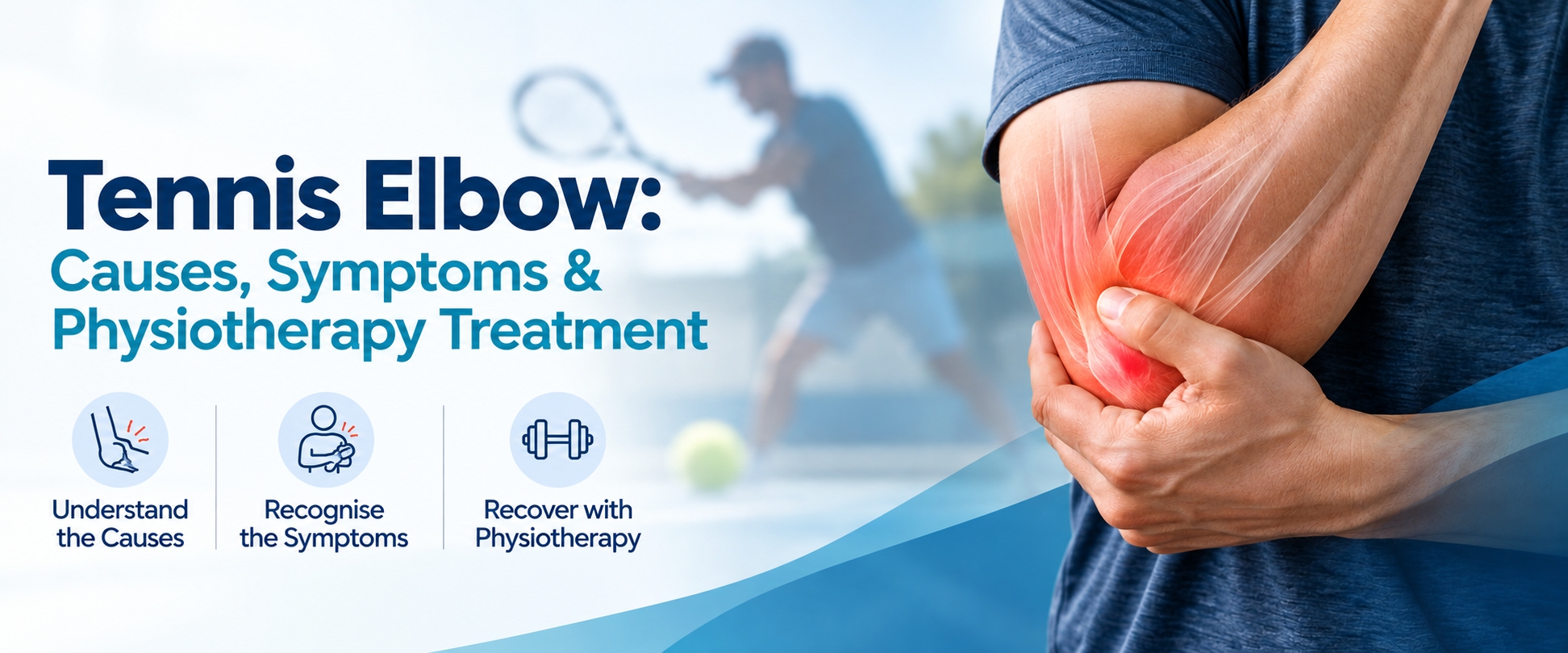
Tennis elbow, also known as lateral elbow tendinopathy, is a common cause of pain and tenderness around the outside of the elbow. Despite its name, it does not only affect tennis players. It can develop when the wrist and forearm are repeatedly exposed to loads they are not currently conditioned to tolerate. At YOS Health, London Bridge, physiotherapy focuses on identifying contributing factors and progressively restoring strength and function.
What is Tennis Elbow?
Tennis elbow involves pain associated with the tendons attaching the forearm muscles to the outside of the elbow. It is commonly called lateral elbow tendinopathy. Symptoms are often aggravated by gripping, lifting and repetitive wrist or forearm movements.
What Causes Tennis Elbow?
Tennis elbow can develop when repetitive or increased loading exceeds the capacity of the tissues around the elbow. It may follow a sudden increase in activity or build gradually.
- Repetitive gripping or lifting
- Racquet sports
- Manual work involving tools
- Repetitive wrist movements
- Sudden increases in training or workload
- Reduced forearm strength or conditioning
Common Symptoms
- Pain over the outside of the elbow
- Tenderness around the outer elbow
- Pain when gripping objects
- Discomfort when lifting or carrying
- Pain with wrist or forearm movements
- Reduced grip strength
- Difficulty with work, sport or daily activities
Who Can Develop Tennis Elbow?
Tennis elbow can affect active people, office workers and people performing repetitive manual tasks. Racquet sports, occupational loading and sudden changes in exercise or workload may increase the likelihood of symptoms.
How is Tennis Elbow Diagnosed?
A physiotherapist can usually assess tennis elbow clinically through your history and physical examination. Assessment may include elbow and wrist movement, grip strength and functional tasks. The shoulder and neck may also be assessed when appropriate. Imaging is not routinely required in every case, but further investigation may be considered when symptoms are unusual, persistent or not responding as expected.
Physiotherapy Treatment for Tennis Elbow
Activity Modification
Temporarily adjusting activities that aggravate symptoms can reduce excessive tendon loading while allowing you to remain appropriately active.
Progressive Strengthening
Gradual strengthening of the wrist and forearm muscles is a key component of rehabilitation. Exercise intensity is progressed according to symptoms, strength and functional demands.
Manual Therapy
Where appropriate, manual therapy may be used alongside exercise to help manage pain and support movement.
Technique and Movement Correction
Your physiotherapist may assess gripping, lifting, gym technique or sporting movements and recommend changes that reduce unnecessary elbow loading.
Return to Work and Sport
Rehabilitation progresses towards the activities you need to perform, with gradual increases in load rather than an abrupt return to full activity.
Exercises for Tennis Elbow
Your programme should be individualised, but rehabilitation may include:
- Wrist extension strengthening
- Wrist flexion strengthening
- Forearm rotation exercises
- Grip strengthening
- Isometric exercises
- Progressive resistance exercises
- Functional lifting and loading exercises
The appropriate exercises, resistance and progression depend on your assessment and symptoms, so avoid treating a generic exercise list as a substitute for clinical advice.
How Long Does Tennis Elbow Take to Recover?
Recovery varies between individuals. Some people improve within several weeks, while others experience symptoms for several months. Appropriate load management, consistent rehabilitation and a gradual return to demanding activities can support recovery.
Can Tennis Elbow Be Prevented?
- Increase exercise and work loads gradually
- Maintain forearm strength
- Use appropriate technique during sport and lifting
- Take breaks from repetitive tasks
- Address persistent elbow pain early
- Maintain overall upper-limb conditioning
When Should You See a Physiotherapist?
Consider professional assessment if elbow pain persists, affects daily activities, reduces grip strength, limits exercise or continues despite modifying aggravating activities. A physiotherapist can identify contributing factors and create an appropriate rehabilitation plan.
Why Choose YOS Health London Bridge?
At YOS Health, our musculoskeletal physiotherapists provide personalised assessment and evidence-informed rehabilitation for elbow pain and sports-related conditions. Treatment is tailored to your symptoms, activity demands and recovery goals, with an emphasis on restoring strength and function.
Frequently Asked Questions
Is tennis elbow only caused by playing tennis?
No. Tennis elbow can develop from many repetitive activities involving gripping, lifting or wrist movements, including occupational and gym activities.
Can physiotherapy help tennis elbow?
Yes. Physiotherapy can help manage symptoms and restore function through education, activity modification, progressive strengthening and other appropriate techniques.
Should I stop exercising if I have tennis elbow?
Not necessarily. A physiotherapist can help modify activities and determine appropriate levels of loading while rehabilitation progresses.
Do I need an MRI for tennis elbow?
Imaging is not routinely required for every case. A clinician can determine whether further investigation is appropriate based on the assessment.
How long does tennis elbow last?
The recovery period varies. Symptoms may improve over weeks or persist for several months, particularly when aggravating activities continue.