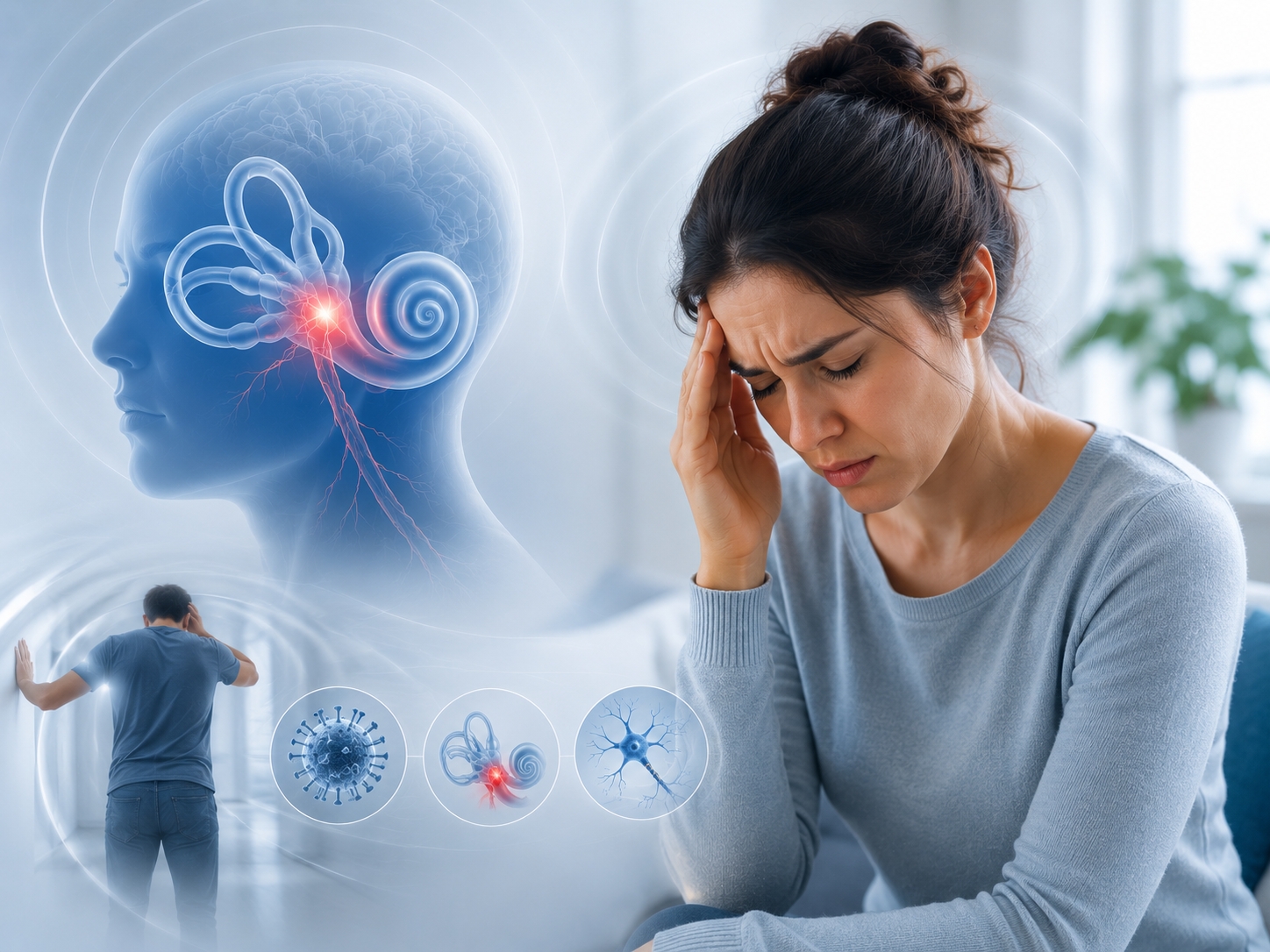
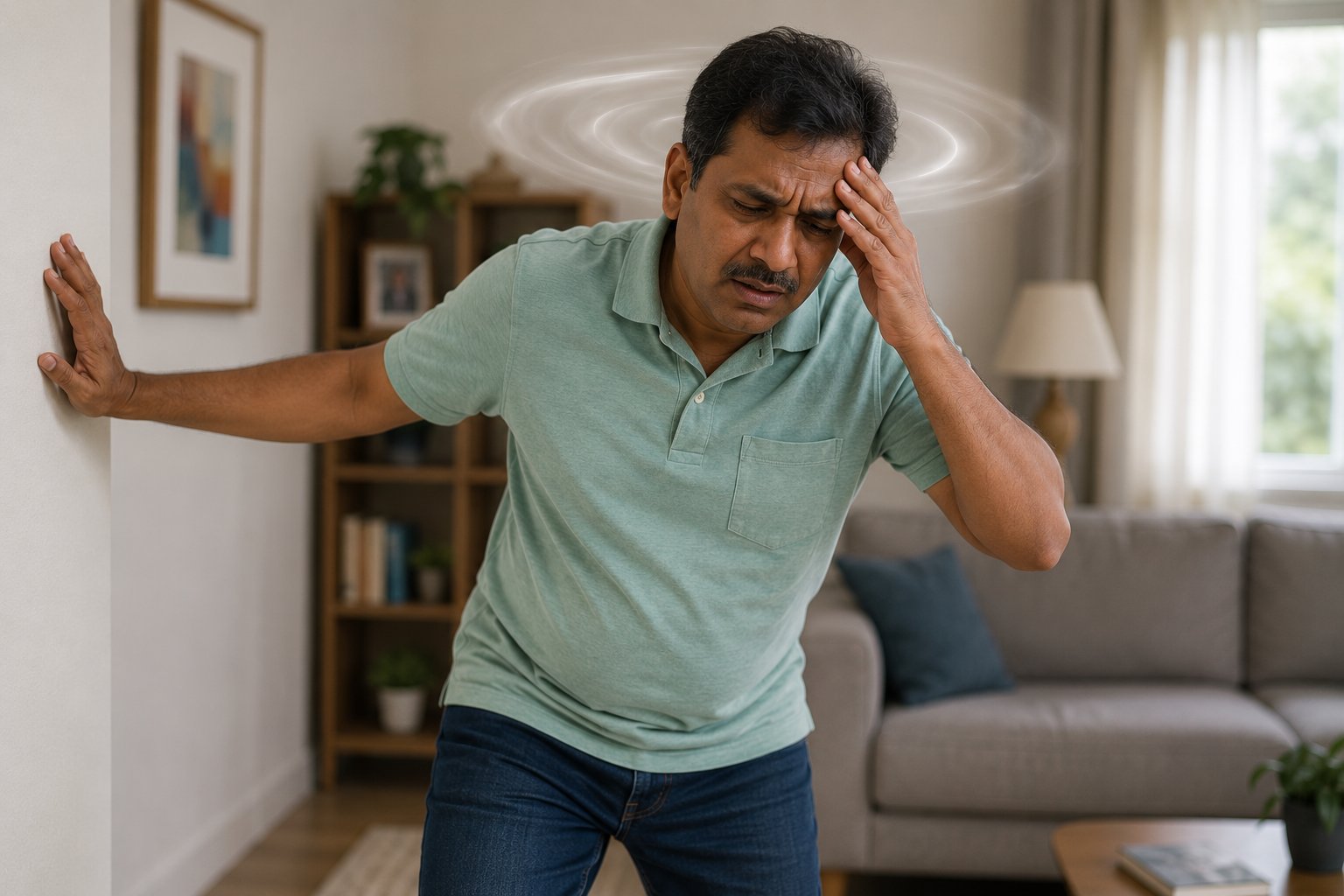
At YOS HEALTH, we provide specialist vestibular rehabilitation for people recovering from vestibular neuritis and labyrinthitis — the most common acute vestibular conditions. Both conditions cause sudden, intense vertigo that can be frightening and debilitating, often following a viral illness. With the right rehabilitation, the brain is able to compensate for the damage and most people make significant progress.
Vestibular neuritis is caused by inflammation of the vestibular nerve — the nerve that carries balance information from the inner ear to the brain. Labyrinthitis is similar but also affects hearing. Without rehabilitation, the brain's natural compensation process is slower and often incomplete, leaving people with residual dizziness, head movement sensitivity and unsteadiness for months after the acute phase.
Specialist vestibular rehabilitation is the most effective treatment for accelerating recovery. Our programme uses specific exercises to promote the brain's adaptation, progressed at your pace as you improve.
Every rehabilitation programme is individually tailored to your stage of recovery, symptom pattern and physical goals.
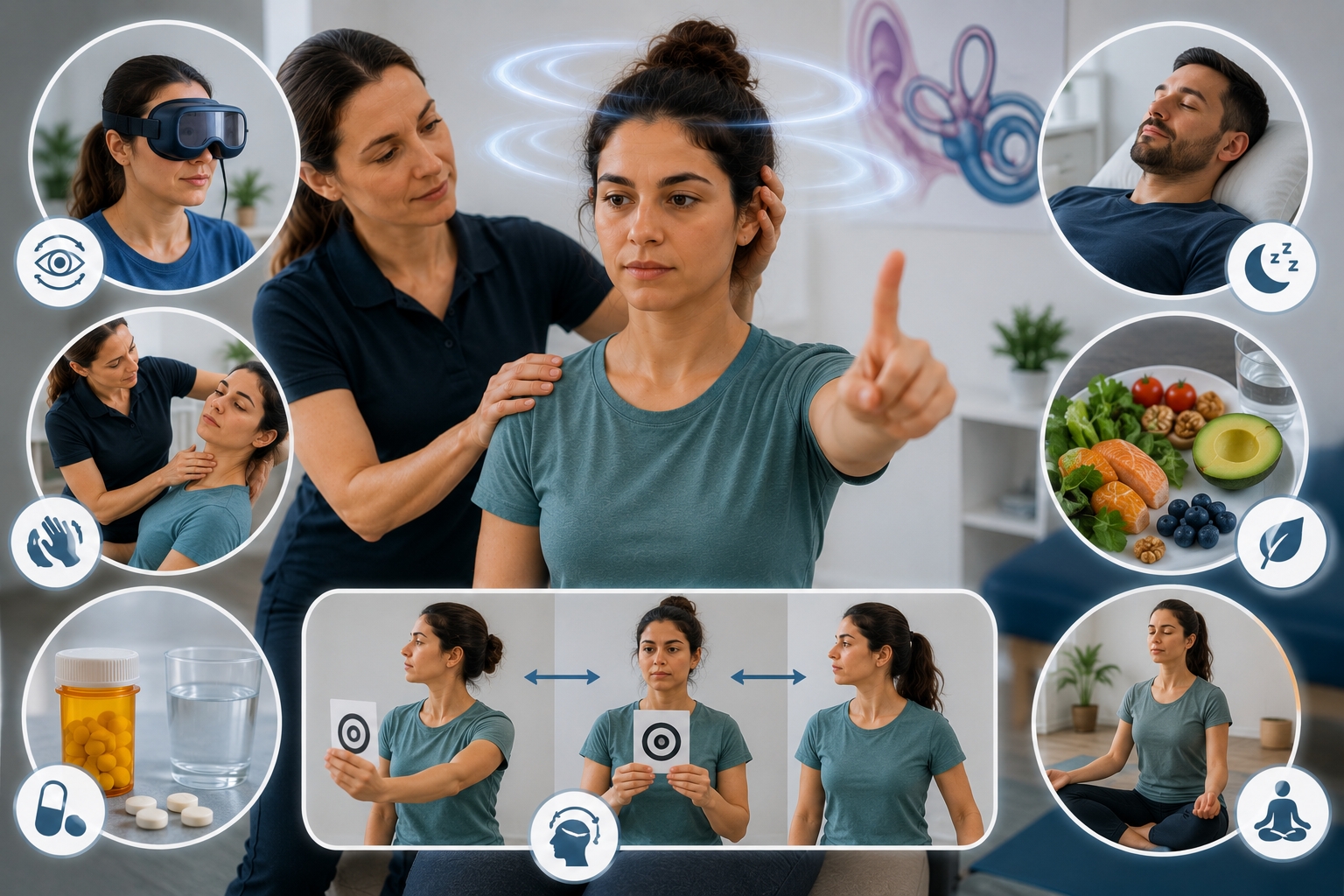
Structured vestibular rehabilitation accelerates the brain's natural compensation process and significantly improves recovery outcomes.
Studies consistently show that people who undertake structured vestibular rehabilitation recover faster and more completely than those who rest and wait.
We design individualised rehabilitation programmes based on your specific stage of recovery, symptom pattern and physical goals — not a generic exercise sheet.
Without rehabilitation, vestibular neuritis can lead to PPPD and prolonged dizziness. Early specialist input significantly reduces this risk.
Our vestibular physiotherapist has advanced specialist expertise in both vestibular rehabilitation and neurological physiotherapy and brings advanced diagnostic and rehabilitation expertise to every appointment.
Vestibular neuritis affects only the vestibular nerve, causing vertigo and balance problems without hearing changes. Labyrinthitis affects both the vestibular nerve and the cochlea, causing similar balance symptoms alongside hearing loss or tinnitus. Both conditions are treated with vestibular rehabilitation.
The acute phase typically lasts days to weeks. Residual dizziness and balance problems can persist for months without rehabilitation. With specialist vestibular rehabilitation, most people make significant progress within four to eight weeks, though full recovery may take longer depending on the severity of the initial episode.
Research consistently shows that structured vestibular exercises — not bed rest — lead to faster and more complete recovery. The brain adapts and compensates through movement and specific rehabilitation exercises. Prolonged rest can slow recovery and increase the risk of developing persistent dizziness.
No. You can self-refer directly. If you have recently had vestibular neuritis or labyrinthitis, please bring any letters from your GP or hospital to your appointment.
Speak with our vestibular physiotherapy specialist at YOS HEALTH, London Bridge.